Pylos, Messinia
The cinematic harbor where Mycenaean kings and naval legends meet.
The Place: A Mosaic of Arches and Azure
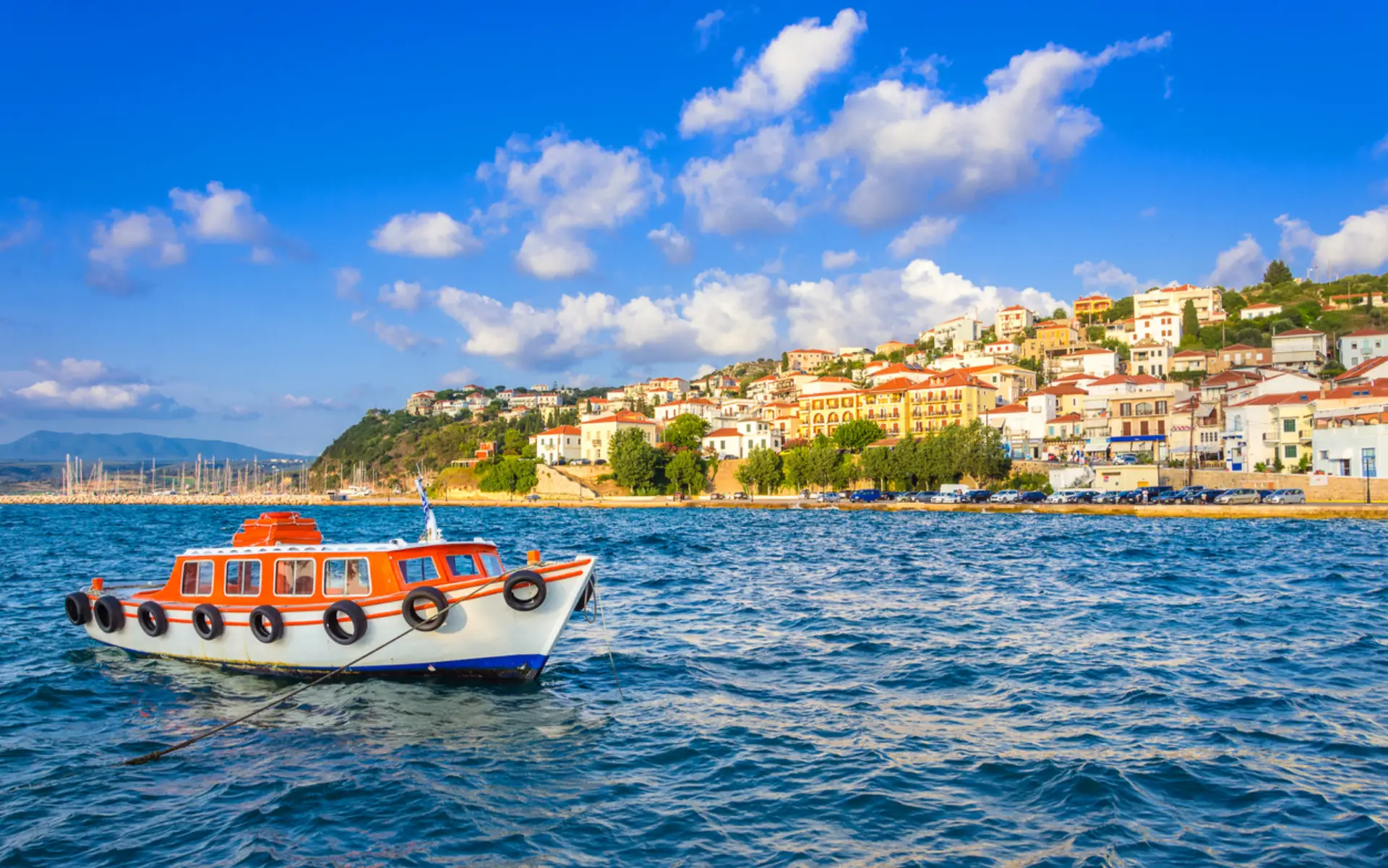
Pylos is a geographical trick; with its white-washed houses, red-tiled roofs, and the massive, breakwater-island of Sphacteria shielding the bay, it feels more like the Spetses or Hydra than the Peloponnese. Designed by French engineers in 1829, the town is built around the Square of the Three Admirals, where ancient plane trees provide a massive canopy for long, unhurried coffees. It is a town of vertical beauty, where narrow stone steps lead from the fortress ramparts down to a harbor that smells of salt and fresh grilled mullet.
The Soul of the Bay: Wrecks, Reefs, and Revolution
Navarino Bay is not just a harbor; it is one of the Mediterranean’s most significant “underwater museums”:
-
The Silent Fleet: Beneath the tranquil surface of the bay lie the remains of the Ottoman and Egyptian fleet, sunk in 1827 during the Battle of Navarino—the last great naval clash of the age of sail. While the deep wrecks are for the history books, the spirit of this turning point in Greek independence is felt everywhere, from the monuments on the islets to the annual “Navarinia” light shows.
-
The Niokastro Spirit: Overlooking the bay is the New Castle (Niokastro). Walking its hexagonal ramparts through pine and palm trees offers the most spectacular view of the Ionian Sea. Inside, the renovated barracks house the Archaeological Museum of Pylos, where 3D representations bring the prehistoric kingdom of Nileas back to life.
-
Sphacteria’s Echo: The long, rugged island of Sphacteria acts as a natural wall. It is a place of pilgrimage for “beyond the obvious” explorers, home to the wooden Russian chapel and monuments to the fallen sailors of three nations.
Beyond the Harbor: The Omega and the Alchemists
Pylos is the gateway to a landscape of rare ecological and archaeological alchemy:
-
The Omega of Voidokilia: Just north lies Voidokilia Beach, a perfect semicircle of turquoise water and pale dunes that looks like the Greek letter Omega. It is a place of myth, where Nestor’s Cave, high above the sand, is said to be where the wise king raised his horses.
-
The Gialova Sanctuary: Adjacent to the beach is the Gialova Lagoon, a Natura 2000 protected wetland. For the “slow traveler,” it is a paradise for quiet birdwatching—home to flamingos, herons, and the rare African chameleon—where the only sound is the rustle of the reeds.
-
Nestor’s Palace: A short drive through silver-green olive groves brings you to the best-preserved Mycenaean palace in Greece. Standing in the Throne Room of King Nestor, you can still see the colorful frescoes and the ancient bathtub mentioned in Homer’s Odyssey.
The Rhythm of the Square & The Sea
-
The Art of the Waterfront Stroll: In Pylos, the evening volta (stroll) along the promenade is a ritual. We pair this with “Signature Dining” at the Koukos or the harbor-side tavernas, where local Messinian flavors like Hilopites (handmade pasta) and oranges-scented sausages take center stage.
-
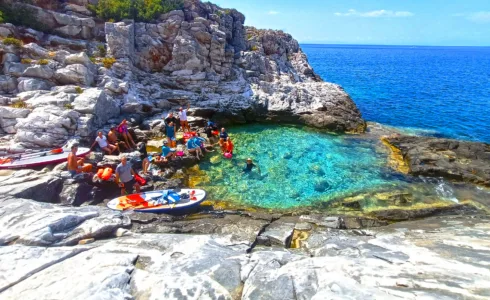
Navarino Nautical Pace: The calm, “lake-like” waters of the bay are ideal for an unhurried sea kayaking journey or an open water swim. Gliding past the cliffs of Tsichli-Baba and its natural stone arch is the ultimate way to feel the scale of this mythic harbor.
-
The Liquid Gold of Messinia: You are in the heart of the world’s finest olive oil production. A visit to a local estate for a tasting of Kalamata PDO oil is not just a culinary stop; it’s an initiation into the Laconian soul.
Plan Your Navarino Experience
Whether you are exploring the Niokastro Ramparts or following the Sea Kayak the West Coast expedition, Pylos offers a refined sanctuary for those who seek history at a human pace.