Mystras, Laconia
A Byzantine masterpiece carved into the mountainside.
The Place: The “Wonder of the Morea”
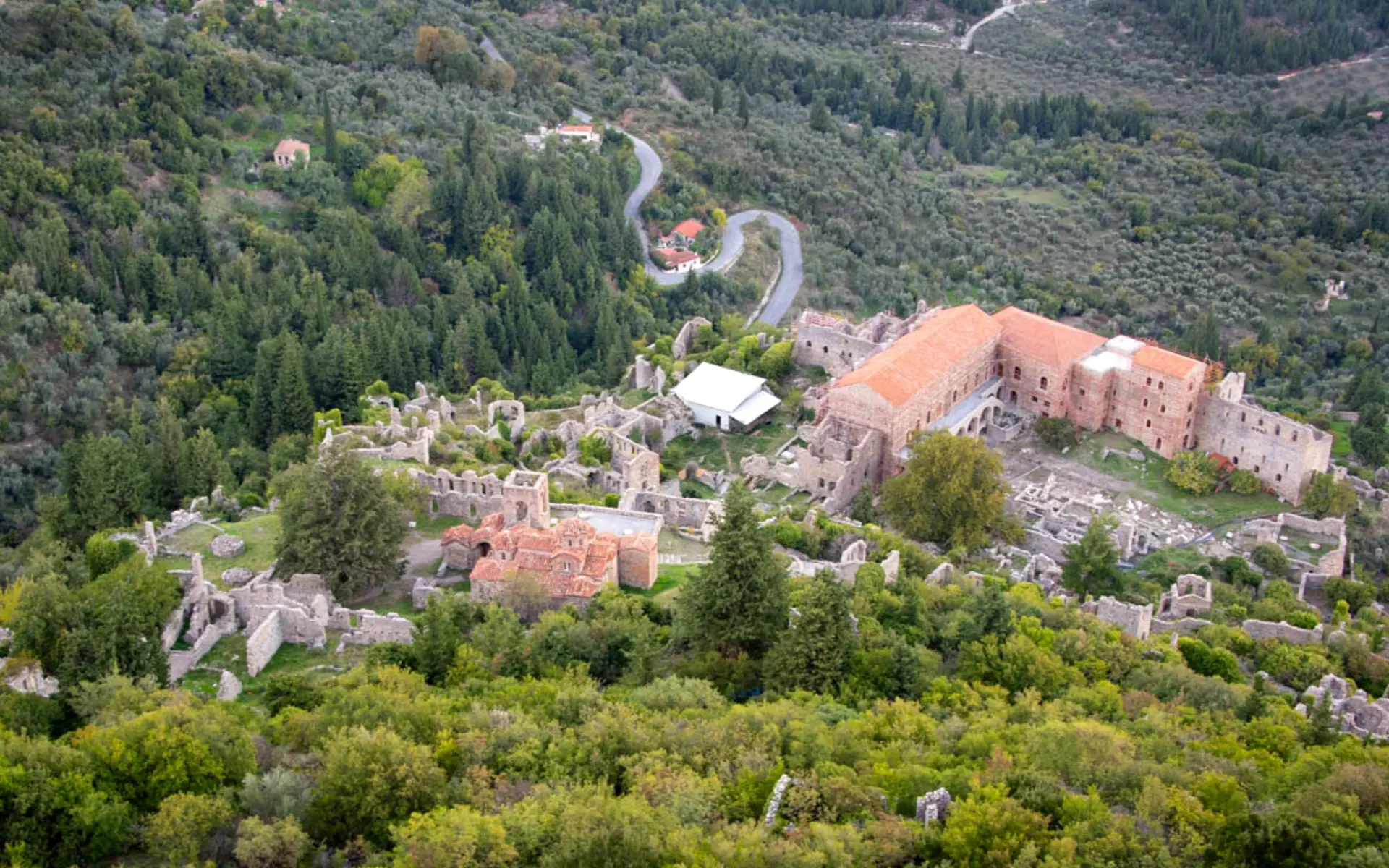
Rising dramatically from the foothills of Mount Taygetos, Mystras is a medieval walled town that seems to defy gravity. Once the brilliant capital of the Despotate of Morea and the second city of the Byzantine Empire, it is now a standing “ghost city.” It is divided into an Upper and Lower Town—a vertical labyrinth of winding cobblestone paths, fortified gates, and aristocratic mansions that overlook the silver-green sea of the Eurotas olive groves.
The Soul of the Site: A Renaissance in Ruins
Mystras is not a place of “dead stones,” but a sanctuary of late-medieval enlightenment:
-
The Living Monastery: Amidst the deserted ruins, the Pantanassa Monastery remains active. Here, the resident nuns tend to hanging gardens of bougainvillea and jasmine, their quiet presence a bridge between the city’s glorious past and its peaceful present.
-
The Palaeologan Renaissance: The churches of Mystras—like the Peribleptos and Agios Demetrios—house some of the most important Byzantine frescoes in the world. They represent a final, brilliant flowering of art and philosophy that occurred just before the fall of the empire.
-
The Last Emperor’s Shadow: It was here, in the Metropolis, that Constantine XI Palaeologos was crowned the last Byzantine Emperor. Walking through the throne room of the Palace of the Despots offers a profound sense of the weight of history.
Beyond the Fortress: The Mythic Spartan Valley
Mystras is the gateway to the Laconian heartland, where the “human pace” alternates between high-altitude drama and fertile serenity.
-
The Museum of the Olive & Greek Olive Oil: Located in nearby modern Sparta, this is the ultimate “marriage” of culture and agriculture. It is a sophisticated, sensory journey through the history of the tree that defines the Greek soul.
-
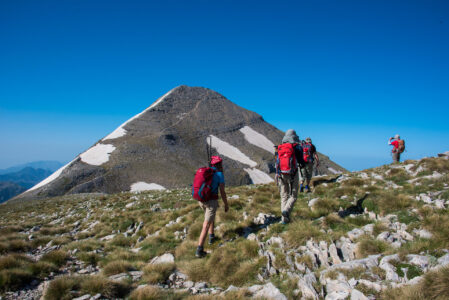
The Taygetos Skyline: The slopes of Mount Taygetos offer cool, shaded forest trails and dramatic gorges. It is a landscape of “hairpin views” and hidden springs, providing a rugged counterpoint to the town’s architectural elegance.
-
Sparta’s Warrior Echo: A short 5km drive brings you to the statue of King Leonidas and the ruins of Ancient Sparta. While less visually intact than Mystras, the location carries a legendary resonance that completes the story of this fierce and beautiful land.
The Rhythm of the Mountain & The Mill
-
The Art of the High-Altitude Pause: After climbing the ruins, there is no greater pleasure than a “slow coffee” in the village of Taygeti or Mystras, looking back at the castle as the sun begins to set.
-
Savoring the “Liquid Gold”: The Eurotas valley is the source of Greece’s most prized olive oil. We pair local culinary exploration with visits to traditional producers, turning the “Signature Picnic” into a masterclass in regional Laconian flavors—think Kayanas (eggs with tomato and feta) and cured Syglino pork.
-
Byzantine Repose: Staying in one of the restored stone manors at the foot of the hill ensures your daily discovery is followed by a night of silence, broken only by the sound of the wind in the Taygetos pines.
Plan Your Mystras Experience
Whether you are exploring the Byzantine Palaces or tracing the Spartan Trails, Mystras offers a profound immersion into the layered memory of Greece.