
Destination · Olympia & West CoastAncient Olympia
The walled sanctuary in the Alfeios valley where the Olympic Games were held every four years for nearly twelve centuries — temples, treasuries, the original stadium, and a museum holding some of the finest sculpture surviving from the ancient world.
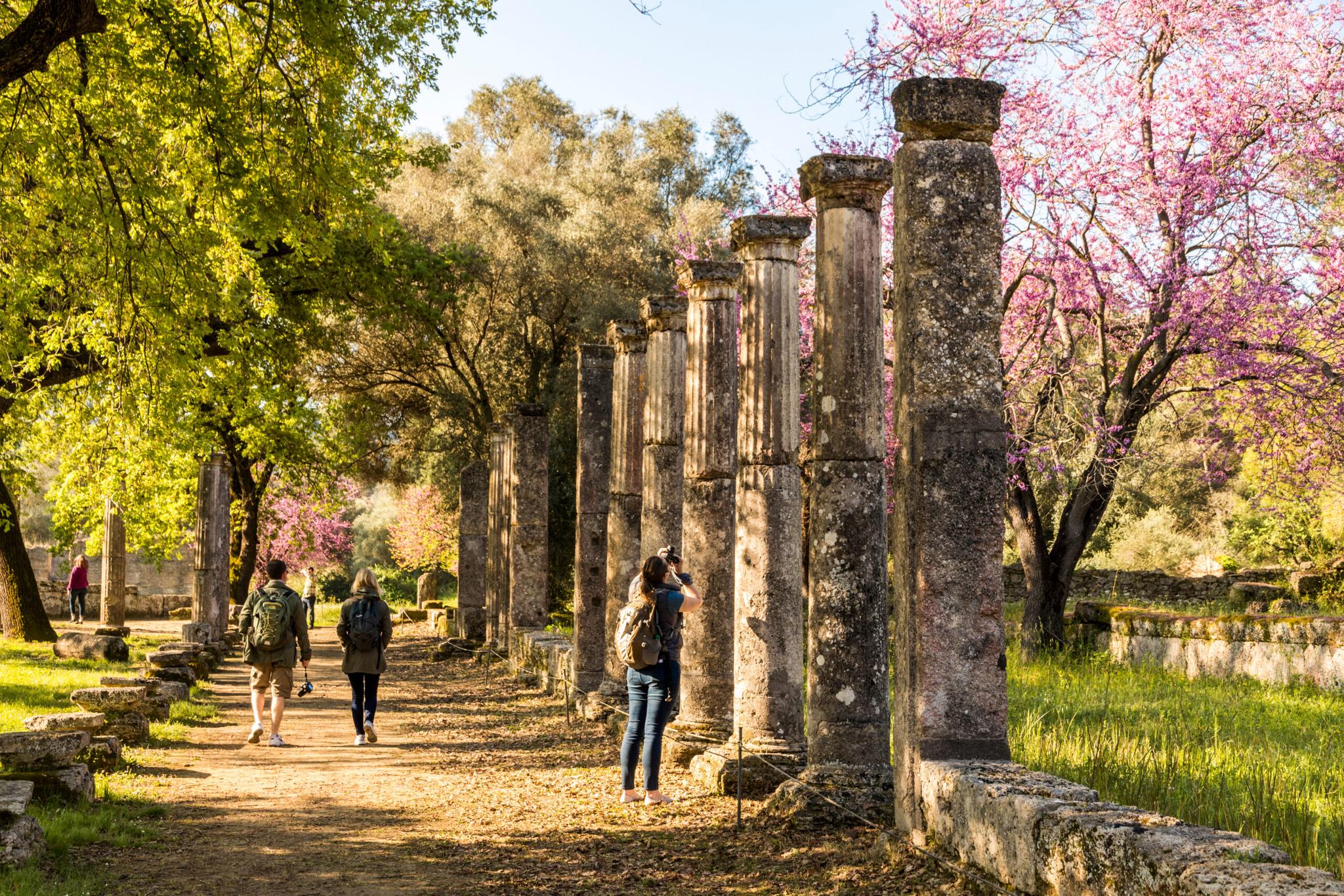
A working sanctuary, not a backdrop.
Olympia is not a single ruined temple but a cluster of buildings inside a flat sacred precinct — about the size of a small village — set between two rivers and a low pine-covered hill called Kronos.
The site was active from the 8th century BCE to the 4th century CE, and what survives is a cross-section of twelve hundred years: a Doric temple of Hera, a Doric temple of Zeus that once held the Pheidias gold-and-ivory statue (one of the Seven Wonders), the workshop where Pheidias built it, the original Olympic stadium with its earthen banks still in place, and a long row of treasuries from the Greek city-states. The on-site museum, four hundred metres away, is one of the three best in Greece — the Hermes of Praxiteles, the Nike of Paionios, and the pediment sculptures from the Temple of Zeus are all here, in the rooms they were built for.
Five ways to meet the place.
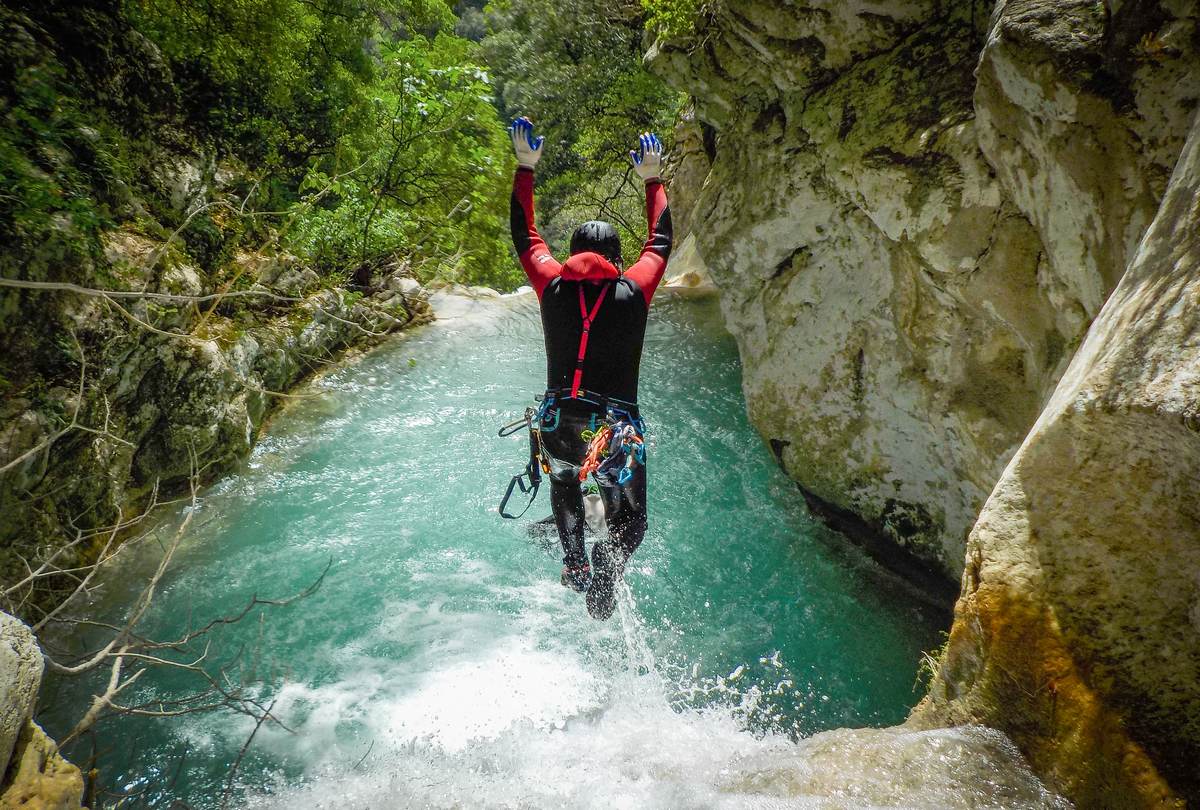
A paddle at dawn, a tasting in the grove, a sail across the bay.
From dawn to the late drive home.
How we pace the site so you don't end up trudging through a museum at 14:00 with empty legs.
- 07:30
Coffee at the village
Greek coffee and a tiropita on the main street — the village wakes up slowly, buses haven't arrived yet.
- 08:00
Gate opens — straight to the stadium
Skip the temples on the way in. Walk the 600m to the original Olympic stadium and stand on the start-line stones in complete silence.
- 09:00
Temples and treasuries
Loop back through the Temple of Zeus, the Heraion, and the row of city-state treasuries. By 09:30 the buses are arriving and you're already done with the busy bits.
- 10:30
Workshop of Pheidias
The building most visitors skip — and where the most famous statue of antiquity was actually made. Twenty minutes.
- 11:30
Museum — pediments first
Walk across to the museum and head straight to the pediment room. Forty-five minutes there before lunch.
- 13:30
Long lunch in the village
Taverna Orestis (outdoor tables) or Symposio in the village — slow lunch, two hours, no rush. The afternoon heat is for the museum, not the site.
- 16:00
Museum — the rest
Hermes of Praxiteles, Nike of Paionios, and the smaller rooms. Cool, quiet, well-lit.
- 18:30
Sunset on Kronos hill
A ten-minute climb up the pine-covered hill behind the sanctuary, on the path from the Botanic Garden by the ticket office. Late light over the whole site, swallows everywhere.
The shape of the place.
Walking distance from the sanctuary gate.
- 01
Archaeological Museum
The on-site museum holding the pediment sculptures of the Temple of Zeus, the Hermes of Praxiteles, and the Nike of Paionios. 400m from the sanctuary gate.
- 02
Museum of the History of the Olympic Games
Smaller and underrated, and covered by the same €20 ticket — the original ancient Games as a working institution, with starting-line stones and javelin grips.
- 03
Modern Olympia village
Around nine hundred people, three tavernas (Aegean, Orestis, Symposio), and the tourist office on the main street. A 7-minute walk from the gate.
- 04
Magna Grecia winery
A 10-minute drive west at Flokas — a fourth-generation family farm making olive oil, olives and a little wine, with tours and tastings. Book ahead.
- 05
Kronion hill
The pine-covered hill directly north of the sanctuary — a ten-minute climb from the Botanic Garden by the ticket office, for the evening light over the whole site.
Let us shape your week here.
Tell us a little about the trip you want — pace, who's coming, how you'd like to spend your mornings. We'll build the days.